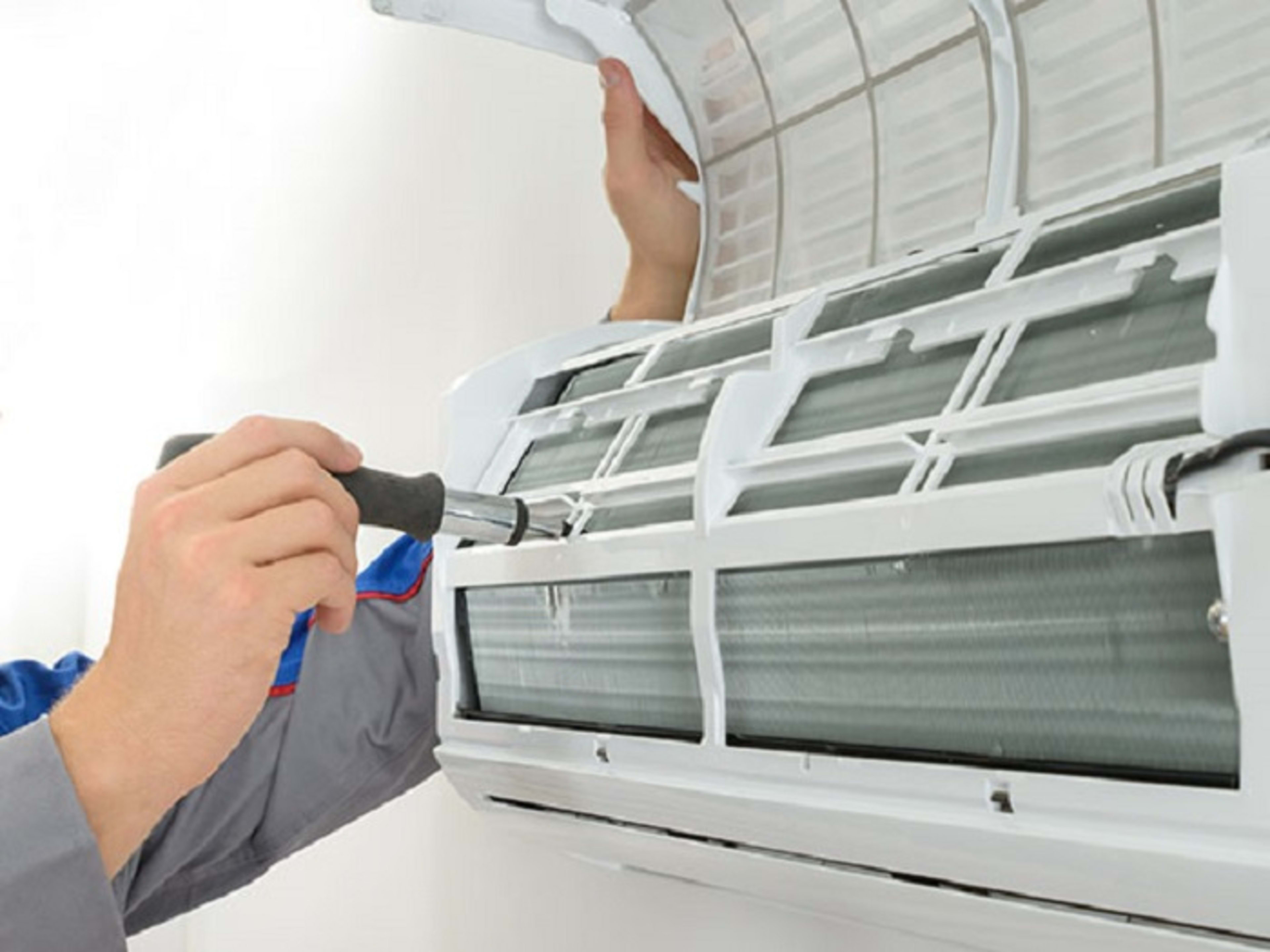
5 Warning Signs Your Aircon Needs an Urgent Chemical Overhaul
A chemical overhaul is the most intensive restoration procedure for a wall-mounted air conditioner. Unlike standard on-the-wall servicing, an overhaul involves completely dismounting the fan coil unit from your wall to submerge every single piece in a deep chemical bath.
Here are 5 clear warning signs that your unit requires an urgent chemical overhaul.
1. Ice Blockages Forming on Coils and Copper Pipes
If you see ice crystals or frost forming behind the front filter or on the outdoor brass valves, your aircon's heat exchange process is severely restricted. This is usually caused by heavy dirt build-up insulating the coils, forcing temperatures below freezing point.
2. Water Dripping Continuously Down the Wall
When a water drainage line is completely packed with bio-jelly and thick mold, standard drain flushing will no longer clear the blockage. Demounting the back tray during an overhaul clears 100% of the blockage, stopping wall damage.
3. Loud Rattling or Squeaking Noises from the Indoor Unit
Dirt accumulating unevenly on the cylindrical fan blower wheel causes imbalance. As the blower spins at high speeds, this imbalance creates loud vibrations, squeaks, and excessive motor strain.
4. Weak Airflow Even at Maximum Fan Speed
When dust penetrates deep into the secondary coil layers, it blocks the narrow air passages completely. Even if your fan motor is running at top speed, only a trickle of air escapes.
5. High Electricity Bills with Poor Cooling
When internal components are choked, the compressor must run continuously without cycling off. This dramatically inflates your monthly SP Group utility bill while delivering minimal cooling comfort.
What Is a VRV/VRF Aircon System?
VRV and VRF systems are advanced multi-zone air-conditioning systems designed to provide centralized yet flexible climate control.
VRV is a trademarked term associated with Daikin, while VRF, meaning Variable Refrigerant Flow, is widely used as the general industry term.
These systems are commonly installed in offices, hotels, commercial buildings, large residences, and other properties where multiple indoor spaces need coordinated air-conditioning.
Because a VRV/VRF system can connect multiple indoor units to outdoor equipment through a refrigeration and control network, servicing requires a more comprehensive approach than basic split-unit maintenance.
Why VRV/VRF Servicing Is Important
A VRV/VRF system contains multiple components that work together.
These may include:
- Indoor units
- Outdoor units
- Refrigerant piping
- Control boards
- Sensors
- Communication wiring
- Drainage
- Fans
- Compressors
- Controllers
A problem in one component can sometimes affect one zone, while other issues can affect multiple indoor units.
Regular servicing helps monitor the condition of the system.
Indoor Unit Servicing
Each indoor unit should be inspected and maintained according to its condition.
The technician may check:
- Filters
- Evaporator coil
- Fan blower
- Drain tray
- Drainage
- Airflow
- Temperature response
- Error indicators
Dirty indoor units can experience weak airflow and reduced cooling performance.
Filter Cleaning
Filters capture dust and airborne particles.
When they become blocked, airflow can decrease.
In a multi-zone system, poor maintenance of individual indoor units can result in inconsistent performance between rooms.
Regular filter maintenance is therefore important.
Fan Coil Cleaning
The indoor fan coil area can collect dust and moisture over time.
Heavy contamination may affect airflow and contribute to unpleasant smells.
Standard cleaning may be sufficient for lightly contaminated units, while chemical servicing may be considered for heavily dirty indoor units.
Drainage Maintenance
Indoor units produce condensation during cooling.
The water should flow through the drain tray and drainage system.
A blocked drain can cause water leakage.
Because VRV/VRF installations can include many indoor units, drainage should be checked across the system rather than focusing only on the most visible unit.
Outdoor Unit Servicing
Outdoor units are responsible for heat exchange and refrigerant system operation.
Maintenance may include inspection of:
- Condenser coils
- Outdoor fans
- Electrical components
- Refrigeration components
- Airflow
- General operating condition
Outdoor condenser cleaning is important where dust or debris has accumulated.
VRV/VRF Not Cooling
Poor cooling in a VRV/VRF system can have several causes.
Possible issues include:
- Dirty indoor unit
- Dirty outdoor condenser
- Refrigerant-related problems
- Fan problems
- Sensor faults
- Control issues
- Communication problems
- Electrical faults
- Compressor-related problems
Because the system is interconnected, diagnosis should consider whether the problem affects one indoor unit or multiple zones.
Refrigerant Checks
Refrigerant management is particularly important in VRV/VRF systems.
If the refrigerant circuit has a problem, multiple indoor units can potentially experience reduced performance.
Repeated refrigerant loss should be investigated for possible leakage.
Adding refrigerant without understanding the cause of the loss may only provide temporary improvement.
Refrigerant Leak Investigation
A suspected leak may require inspection of relevant refrigerant piping, joints, valves, and other components.
The appropriate diagnostic method depends on the equipment and suspected fault.
Once the source is identified, repair can be considered before restoring the refrigerant condition.
PCB and Control Systems
VRV/VRF systems rely heavily on electronic control components.
PCBs can manage communication, fan functions, compressor commands, sensors, and other operations.
A control problem can produce error conditions or abnormal system behaviour.
Technicians may need to inspect error information, wiring, sensors, communication components, and control boards.
Communication Problems
Multiple indoor and outdoor components may communicate through the system's control network.
If communication is interrupted, certain indoor units may not operate correctly.
Communication faults can have several possible causes, including wiring issues, control board problems, configuration issues, or other system conditions.
Proper diagnosis is important before replacing electronic components.
Preventive VRV/VRF Maintenance
A preventive maintenance program may include:
- Indoor filter cleaning
- Fan coil cleaning
- Drainage inspection
- Condenser cleaning
- Refrigerant checks
- Electrical inspection
- PCB inspection where appropriate
- Error monitoring
- Controller checks
- Performance testing
The maintenance schedule should reflect system usage and manufacturer requirements.
Commercial VRV/VRF Maintenance
Commercial VRV/VRF systems often operate for long hours.
A failure can affect multiple rooms, offices, meeting spaces, or other occupied areas.
Scheduled maintenance can help identify developing problems before they cause significant disruption.
Businesses can benefit from keeping maintenance records and monitoring recurring faults.
Chemical Servicing for VRV/VRF Indoor Units
Individual indoor units may require chemical servicing when heavy contamination is present.
Chemical cleaning can address dirt on the evaporator coil, blower, drain tray, and accessible internal surfaces.
Because VRV/VRF systems can have many indoor units, the maintenance plan can prioritize units based on condition and usage.
VRV/VRF System Performance Testing
After servicing or repair, the system should be tested.
Depending on the installation, checks can include:
- Cooling operation
- Airflow
- Temperature control
- Indoor unit operation
- Outdoor unit operation
- Error conditions
- Drainage
- Control response
- General system performance
Testing confirms that the maintenance work has not introduced new problems.
When Professional Servicing Is Required
Professional servicing should be considered when:
- Multiple rooms are not cooling
- One indoor unit repeatedly develops faults
- Water leakage occurs
- Refrigerant loss is suspected
- Error codes appear
- Outdoor equipment behaves abnormally
- Communication problems occur
- Cooling performance declines
Early inspection can help identify whether the problem is localized or system-wide.
Why VRV/VRF Maintenance Requires Experience
A VRV/VRF system is more than a collection of independent aircons.
The indoor units, outdoor equipment, refrigerant circuit, control system, and communication network can operate as one integrated installation.
Understanding these relationships is important for accurate diagnosis and maintenance.
Final Thoughts
VRV/VRF servicing requires a system-level approach.
Regular cleaning of indoor units, condenser maintenance, drainage inspection, refrigerant checks, electrical inspection, and control-system monitoring can help maintain reliable operation.
When a VRV/VRF system develops poor cooling, water leakage, refrigerant problems, communication errors, or electronic faults, professional diagnosis can identify the appropriate solution.
A planned maintenance approach is especially valuable for commercial systems where an unexpected breakdown can affect multiple occupied areas.
Conclusion
Investing in a chemical overhaul resets your neglected aircon back to near-factory condition, saving you thousands of dollars compared to buying a brand-new system.