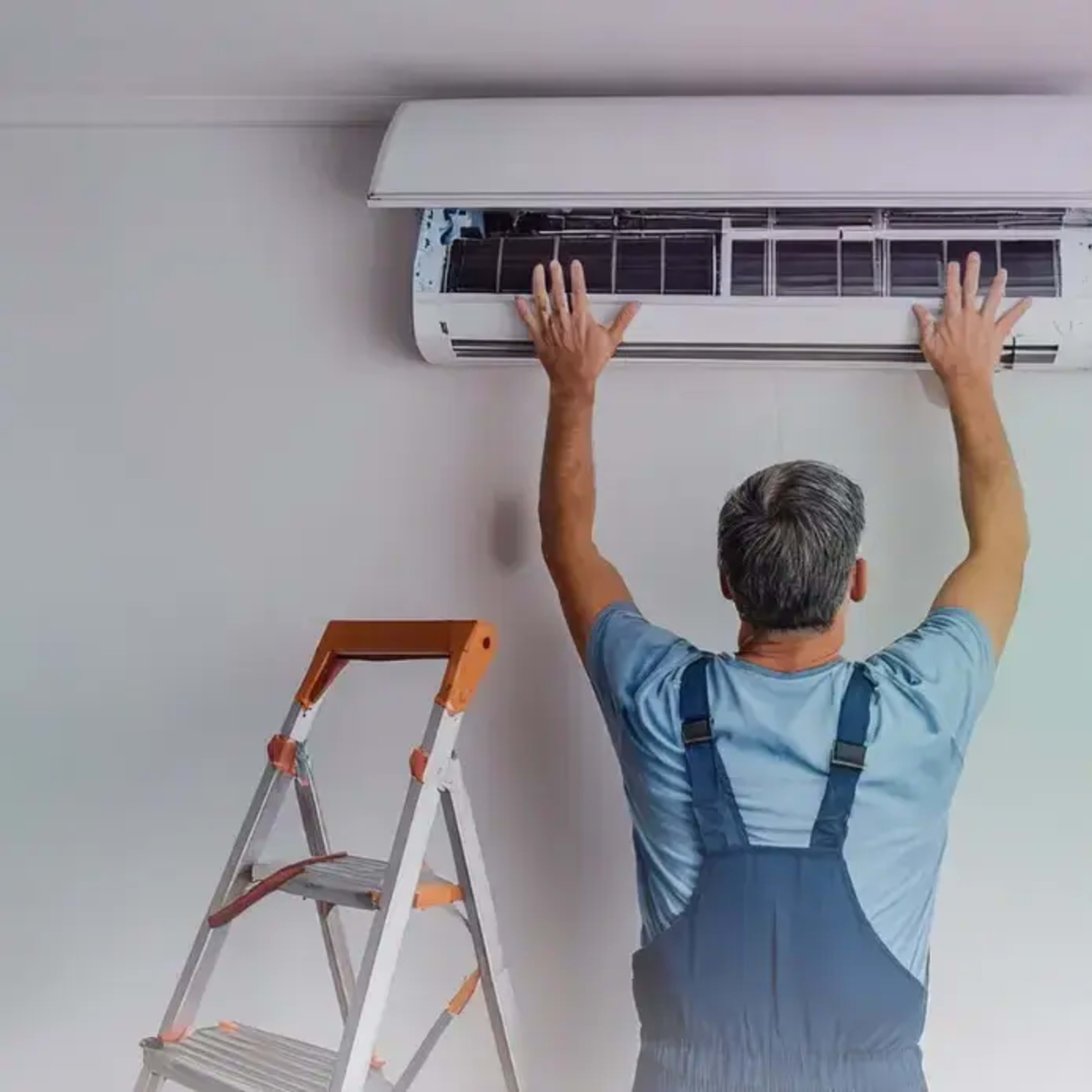
Fan Coil Cleaning: How to Improve Indoor Air Quality & Airflow
Did you know that indoor room air recycles through your aircon unit 5 to 10 times every hour? If internal fan coil cooling fins are dirty, your family breathes in recirculated dust, pet dander, and fungal spores throughout the night.
Here is how targeted fan coil cleaning improves air hygiene and cooling speed.
What Is the Fan Coil Unit (FCU)?
The fan coil unit is the core heat-exchange module located inside your bedroom or living room split air conditioner. Warm room air passes through the cooling fins, dropping in temperature before blowing back into the room.
How Dirty Fan Coils Harm Your Health & Comfort
1. Respiratory Irritation and Allergies
Dark, damp spaces inside dusty cooling fins are prime breeding grounds for mold colonies. Operating a dirty fan coil can trigger morning sinus congestion, coughing, and asthma flare-ups.
2. Reduced Air Throw Distance
When dust coats the cylindrical blower wheel blades behind the coil, the blades lose their aerodynamic scoop shape. Air throw distance drops drastically, leaving distant room corners warm.
Steps in Professional Fan Coil Cleaning
- Anti-bacterial surface brushing of aluminum fins
- Blower wheel blade dust extraction
- Sanitizing spray treatment to stop mold recurrence
- Filter mesh washing
Why Preventive Aircon Maintenance Matters
Air-conditioning systems are often used for many hours every day. Over time, dust, dirt, moisture, mechanical wear, electrical problems, drainage issues, and other conditions can affect performance.
Preventive maintenance focuses on identifying and addressing these conditions before they become major breakdowns.
Instead of waiting until an aircon stops cooling, preventive maintenance provides a structured approach to cleaning, inspection, testing, and repair.
This approach is useful for homes, offices, shops, restaurants, commercial buildings, and larger facilities.
What Is Preventive Aircon Maintenance?
Preventive maintenance is planned service performed to keep an air-conditioning system in suitable operating condition.
It can include:
- Filter cleaning
- Fan coil cleaning
- Condenser cleaning
- Drainage inspection
- Chemical servicing when required
- Refrigerant checks
- Electrical inspection
- PCB inspection
- Performance testing
- Early fault identification
The exact maintenance plan depends on the aircon type and operating environment.
Why Waiting for a Breakdown Can Be Expensive
When an aircon completely fails, the problem may already involve a significant component.
For example, poor cooling may initially be caused by dirt or restricted airflow. If the condition is ignored, the system may continue operating under unsuitable conditions.
Similarly, repeated water leakage may cause damage to surrounding areas if the drainage problem is not addressed.
Preventive maintenance aims to identify such problems earlier.
Air Filter Maintenance
Filters should be checked regularly.
A blocked filter can restrict airflow and reduce the effectiveness of the aircon.
Cleaning or replacing filters according to the equipment requirements can help maintain proper airflow.
The required frequency depends on usage and the environment.
Fan Coil Maintenance
The indoor fan coil should be inspected for dust and contamination.
Areas of interest may include:
- Fan blower
- Evaporator coil
- Drain tray
- Internal surfaces
- Airflow passages
If contamination is heavy, chemical servicing may be recommended.
Condenser Maintenance
The outdoor condenser is exposed to environmental dust and debris.
A dirty condenser can restrict airflow and affect heat transfer.
Regular condenser inspection and cleaning help maintain the outdoor unit.
Adequate clearance around the condenser should also be maintained.
Drainage Maintenance
Drainage is one of the most important parts of aircon maintenance.
Indoor units produce condensation during cooling.
If the drain tray or pipe becomes blocked, water can leak into the occupied space.
Preventive maintenance should therefore include inspection of the drainage system.
Refrigerant System Checks
Refrigerant is part of the aircon's closed cooling circuit.
If refrigerant is repeatedly lost, a leak may need to be investigated.
A gas top up should not automatically be treated as routine maintenance.
If refrigerant is low, the technician should determine whether there is a reason for the low charge and whether repair is required.
Electrical Inspection
Air-conditioning systems contain electrical components that control motors, fans, compressors, sensors, and electronic boards.
Preventive inspection can help identify abnormal conditions before they cause a complete failure.
Electrical work should be performed by appropriately trained professionals.
PCB Inspection
Modern air-conditioning systems rely heavily on printed circuit boards.
A PCB problem can produce different symptoms depending on the equipment.
Preventive maintenance may include monitoring error conditions and abnormal electronic behaviour.
If a PCB fault is suspected, proper diagnosis should be performed before repair or replacement.
Chemical Servicing
Chemical servicing is useful when standard cleaning is no longer sufficient.
It may be considered for heavily contaminated indoor units.
Chemical cleaning can target the evaporator coil, blower, drain tray, and other accessible components.
It should be performed carefully to protect electrical parts and surrounding areas.
Aircon Maintenance for Offices
Office air-conditioning systems can operate for many hours every day.
Large numbers of occupants can also contribute to dust and indoor air contamination.
Regular maintenance can help keep the system operating consistently.
A maintenance plan can also reduce unexpected interruptions during working hours.
Aircon Maintenance for Shops and Restaurants
Retail and food-service environments may have different maintenance requirements.
Aircon systems can be exposed to dust, long operating hours, heat, and other environmental factors.
Regular filter, fan coil, condenser, and drainage maintenance can help maintain system performance.
Maintenance for Ceiling Cassette Systems
Ceiling cassette systems require attention to indoor filters, fan blowers, evaporator coils, drain trays, and drainage.
Because they are installed in ceilings, water leakage should be addressed promptly.
Chemical servicing may be considered when internal contamination is significant.
Maintenance for Ducted Systems
Ducted systems require consideration of both the air-conditioning equipment and air distribution network.
Maintenance can include filter inspection, indoor unit cleaning, condenser cleaning, drainage checks, grille inspection, and ductwork assessment.
Uneven airflow between rooms should be investigated.
Maintenance for VRV/VRF Systems
VRV/VRF systems require a broader maintenance approach because multiple indoor units can operate through connected outdoor equipment.
Maintenance can include:
- Indoor unit servicing
- Condenser cleaning
- Drainage checks
- Refrigerant inspection
- Electrical checks
- PCB and control inspection
- Communication checks
- Performance testing
The maintenance schedule should reflect system usage and manufacturer requirements.
Installation and Maintenance Relationship
Good maintenance starts with good installation.
Correct unit placement, drainage, refrigerant piping, electrical connections, and service access can make future maintenance easier.
If an aircon has recurring drainage, airflow, or performance problems, the original installation should sometimes be reviewed.
Dismantling and Reinstallation
When an aircon is relocated, the system should be inspected during dismantling and reinstallation.
The technician can check the condition of piping, drainage, wiring, mounting components, indoor equipment, and outdoor equipment.
Testing after reinstallation is essential.
Maintenance Records
Commercial properties can benefit from keeping maintenance records.
Records can include:
- Service dates
- Cleaning performed
- Problems identified
- Repairs completed
- Parts replaced
- Refrigerant-related work
- Recurring faults
- Recommended future maintenance
Good records can help identify recurring problems and support better maintenance planning.
Signs That Maintenance Is Overdue
Common signs include:
- Weak airflow
- Poor cooling
- Water leakage
- Unpleasant smell
- Dirty filters
- Dirty condenser
- Longer cooling time
- Unusual sounds
- Repeated technical problems
These signs should be investigated rather than ignored.
Benefits of a Planned Maintenance Program
A planned maintenance program can help provide:
- More consistent cooling
- Better airflow
- Cleaner components
- Early fault identification
- Reduced unexpected downtime
- Better drainage maintenance
- Improved system monitoring
- More predictable maintenance costs
Preventive maintenance does not eliminate every possible failure, but it provides a more structured way to manage air-conditioning equipment.
Final Thoughts
Complete aircon maintenance should cover more than simple filter cleaning.
Depending on the equipment, a comprehensive maintenance approach may include fan coil servicing, condenser cleaning, drainage inspection, chemical cleaning, refrigerant checks, electrical inspection, PCB diagnosis, and performance testing.
Different systems require different maintenance strategies. Wall-mounted split units, ceiling cassette systems, ducted systems, and VRV/VRF installations all have their own technical requirements.
Regular preventive maintenance and timely repair can help keep air-conditioning systems operating reliably and provide a more comfortable indoor environment.
Clean fan coils ensure your home air stays fresh, crisp, and safe for young children and seniors.