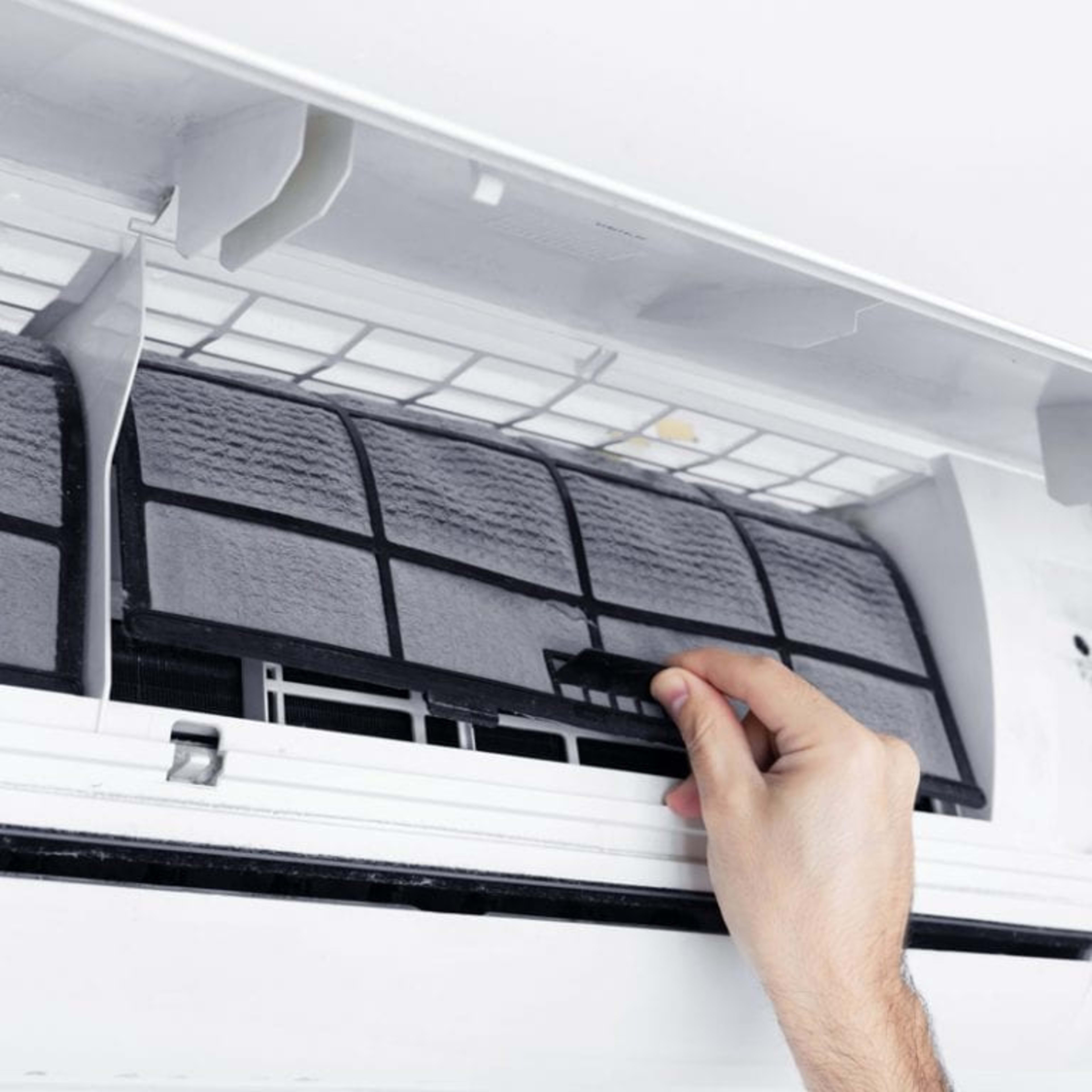
VRV and VRF Aircon Servicing: Ultimate Guide for Commercial Properties
Variable Refrigerant Volume (VRV) and Variable Refrigerant Flow (VRF) systems represent the gold standard for large commercial buildings, industrial spaces, and luxury landed properties in Singapore.
By connecting up to 64 individual indoor units to a single modular outdoor condenser bank, VRV/VRF systems deliver incredible energy efficiency. However, their complex electronic controls demand specialized maintenance.
Key Components Checked During VRV/VRF Maintenance
1. Electronic Expansion Valves (EEV)
Unlike standard split systems that use fixed capillaries, VRV units feature electronic expansion valves that constantly adjust refrigerant flow. Technicians test valve stepping motors to ensure accurate cooling modulation.
2. Modular Inverter Scroll Compressors
Master outdoor units feature multiple scroll compressors operating in tandem. Checking running current, oil levels, and vibration dampeners prevents sudden system-wide failures.
3. Centralized Touch Controllers and Communication Lines
Multi-zone communication cables transfer data between indoor and outdoor modules. Inspecting bus connections prevents communication error codes (like Daikin U4/U5 codes).
4. Condensate Lift Pump & Piping Network
In commercial spaces, long condensate drain lines require routine nitrogen blowouts to prevent blockages across entire office zones.
Benefits of a Scheduled VRV Maintenance Contract
- Minimizes emergency office downtime
- Maintains stable temperature control across different departments
- Provides detailed operational logs for building management audits
What Is a Ducted Air-Conditioning System?
A ducted air-conditioning system distributes conditioned air through a network of ducts to multiple rooms or zones.
Unlike a standard wall-mounted split aircon, a ducted system can provide centralized air distribution across a larger property.
Ducted systems are commonly used in offices, larger homes, commercial buildings, retail spaces, and other environments where concealed air distribution is preferred.
Because the system contains multiple interconnected components, regular servicing is important for maintaining airflow, cooling performance, drainage, and overall reliability.
Main Components of a Ducted System
A ducted air-conditioning installation can include:
- Indoor unit
- Outdoor condenser
- Ductwork
- Supply grilles
- Return air grilles
- Filters
- Dampers
- Drainage
- Refrigerant piping
- Controllers and thermostats
- Electrical components
Each part contributes to overall system performance.
Why Ducted System Servicing Is Important
A ducted system depends heavily on proper airflow.
If filters become blocked or ducts become restricted, the system may struggle to distribute conditioned air effectively.
Poor maintenance can also allow dirt to accumulate on the indoor coil, fan, and other components.
Regular servicing helps identify and address these conditions.
Filter Maintenance
Filters help remove airborne particles from the air entering the system.
When filters become blocked, airflow can decrease.
A restricted filter can also increase the operating load on the system.
Filter maintenance should therefore be part of routine ducted aircon servicing.
The appropriate cleaning or replacement schedule depends on the filter type, usage, and indoor environment.
Indoor Unit Cleaning
The indoor unit contains important airflow and heat-exchange components.
Dust can accumulate on the evaporator coil and fan blower.
If contamination becomes significant, airflow may decrease and cooling performance can suffer.
Professional servicing can inspect and clean these components according to their condition.
Duct Cleaning
Ductwork carries conditioned air throughout the building.
Duct cleaning requirements vary according to the age, design, environment, and condition of the system.
If significant dust or contamination is present inside the ducts, professional duct cleaning may be considered.
The cleaning method should be appropriate for the duct construction and installation.
Supply Airflow Problems
Uneven airflow is a common concern in ducted systems.
One room may receive strong airflow while another room receives very little.
Possible causes can include:
- Blocked filter
- Closed or restricted damper
- Duct restriction
- Poor duct configuration
- Damaged duct section
- Blocked grille
- Indoor unit airflow problem
A technician can inspect the system to determine the cause.
Return Airflow
The return air path is also important.
Conditioned air needs to circulate through the space and return to the indoor unit so that the system can continue its cooling cycle.
Restricted return airflow can affect system performance.
Return grilles and filters should therefore be kept clear and properly maintained.
Drainage Maintenance
Ducted indoor units also produce condensation during cooling.
The water must be directed through a suitable drainage system.
A blocked drain can cause water to accumulate around the indoor unit.
Because ducted equipment may be concealed above a ceiling, a drainage problem can sometimes become difficult to notice until it has already caused damage.
Regular inspection can help identify drainage issues earlier.
Condenser Cleaning
The outdoor condenser is responsible for releasing heat.
Outdoor dust and debris can accumulate on the condenser coil and restrict airflow.
Regular condenser cleaning helps maintain heat transfer and outdoor airflow.
The outdoor unit should also have sufficient clearance around it.
Ducted System Not Cooling
If a ducted system is not cooling properly, several causes should be considered.
Possible issues include:
- Dirty filters
- Dirty evaporator coil
- Dirty condenser
- Refrigerant problems
- Fan problems
- Duct restrictions
- Control issues
- Sensor faults
- Electrical problems
Diagnosis should be performed before replacing parts or adding refrigerant.
Chemical Servicing for Ducted Systems
If the indoor unit is heavily contaminated, chemical servicing may be considered.
Chemical cleaning can target the evaporator coil, fan components, drain tray, and other accessible areas.
The work requires careful protection of electrical components and surrounding ceiling structures.
VRV/VRF Ducted Applications
Some larger air-conditioning installations may combine ducted indoor units with VRV/VRF outdoor systems.
These systems require consideration of both airflow distribution and the larger refrigeration and control network.
Servicing should therefore consider the indoor ducted unit as well as the connected outdoor equipment.
Preventive Maintenance Schedule
A preventive maintenance plan for ducted systems may include:
- Filter inspection
- Indoor coil cleaning
- Fan inspection
- Drainage inspection
- Ductwork inspection
- Grille inspection
- Condenser cleaning
- Refrigerant checks
- Electrical inspection
- Controller checks
- Performance testing
The schedule should be based on usage and system condition.
Commercial Ducted Aircon Maintenance
Commercial ducted systems often operate for extended hours.
A sudden breakdown can affect many rooms or an entire business area.
Regular preventive maintenance can help identify problems before they cause major disruption.
Businesses may benefit from scheduled maintenance rather than waiting for complaints from occupants.
Signs Your Ducted System Needs Servicing
Common warning signs include:
- Uneven room temperatures
- Weak airflow
- Poor cooling
- Water leakage
- Unusual noise
- Unpleasant smell
- Increased operating time
- Dirty filters
- Visible dust around grilles
These symptoms should be investigated rather than ignored.
Importance of Professional Servicing
Ducted systems can contain concealed components that are not easy for a building occupant to inspect.
Professional servicing allows technicians to access and assess the relevant components safely.
The goal is not only to clean visible surfaces but to maintain the overall airflow, drainage, refrigeration, and control systems.
Final Thoughts
Ducted air-conditioning systems provide effective centralized cooling, but their performance depends on the condition of many connected components.
Regular filter maintenance, indoor unit cleaning, duct inspection, drainage maintenance, and condenser cleaning can help keep the system operating properly.
When a ducted system is not cooling, weak airflow or water leakage occurs, professional diagnosis can determine whether the solution is servicing, chemical cleaning, repair, or another form of maintenance.