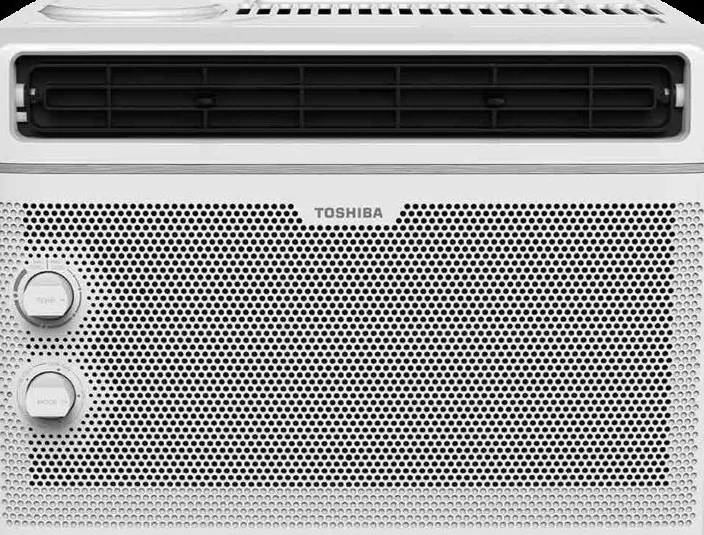
Toshiba Air Conditioners in Singapore: Complete Guide
Toshiba is one of the names that has been associated with Japanese engineering and air-conditioning technology for decades. In the air-conditioning market, the brand is particularly recognised for its focus on inverter compressors, efficient cooling, quiet operation, airflow control, and long-term reliability.
For Singapore households, Toshiba is an interesting choice because an air conditioner here is not an occasional appliance. It may operate every night, throughout the afternoon, or for many hours during weekends. That makes compressor quality, energy efficiency, temperature stability, noise, and maintenance more important than simply choosing the cheapest model.
Toshiba's air-conditioning philosophy can be summed up in a simple idea: cool the room effectively without making the cooling experience unnecessarily noticeable.
That means the best Toshiba system is not necessarily the one with the most features. It is the one that provides stable cooling, efficient operation, quiet performance, and reliable everyday use.
Why Choose Toshiba Air Conditioners?
Toshiba is a strong option for users who value compressor engineering, smooth inverter operation, quiet comfort, and practical long-term performance.
The brand's air-conditioning technology has traditionally placed strong emphasis on the compressor because the compressor is effectively the heart of a refrigeration system.
A well-designed compressor can influence:
- Cooling speed.
- Energy consumption.
- Temperature stability.
- Noise.
- Operating life.
- Overall system efficiency.
Toshiba is particularly known for its inverter compressor technology.
For a Singapore home, this matters because the air conditioner often does not need to operate at maximum capacity for the entire night. Once the room reaches the desired temperature, the cooling requirement decreases.
An inverter system can respond to this changing demand instead of repeatedly operating at full capacity.
### Toshiba can be a good choice for users who want:
- Japanese engineering heritage.
- Efficient inverter cooling.
- Quiet bedroom operation.
- Stable temperature control.
- Strong compressor technology.
- Practical air-cleaning features.
- Modern air-conditioning design.
- Long daily operating capability.
The exact features depend on the model, so buyers should always check the specifications of the specific Toshiba system rather than assuming every model has the same technology.
Types of Toshiba Air Conditioning Systems
Toshiba offers several system configurations depending on the market and application.
### 1. Toshiba Wall-Mounted Split Air Conditioners
Wall-mounted split systems are the most practical option for homes.
They can be used for:
- Bedrooms.
- Living rooms.
- Study rooms.
- Home offices.
- Small commercial spaces.
These systems generally combine an indoor evaporator unit with an outdoor compressor/condenser unit.
For Singapore homes, this is one of the most common and practical configurations.
### 2. Toshiba Multi-Split Air Conditioners
Multi-split systems are suitable for homes where several rooms need air conditioning.
Instead of having a separate outdoor unit for every room, multiple indoor units can be connected to a compatible outdoor system.
This can be useful for:
- Condominiums.
- Landed houses.
- Larger apartments.
- Multi-bedroom homes.
The main advantage is a cleaner overall installation and better use of outdoor space.
### 3. Toshiba Cassette Air Conditioners
Cassette systems are designed for ceiling installation and broader airflow distribution.
They can be useful for:
- Offices.
- Retail spaces.
- Restaurants.
- Meeting rooms.
- Larger living areas.
### 4. Toshiba Ducted Air Conditioning
Ducted systems are appropriate when the air-conditioning equipment needs to be integrated into the ceiling.
Instead of having a visible indoor unit on the wall, air is distributed through ducts and ceiling grilles.
This is often preferred in premium renovations and commercial interiors where appearance is important.
### 5. Toshiba Commercial and VRF Systems
For larger projects, Toshiba also has commercial air-conditioning technologies designed for multi-zone environments.
VRF systems can connect several indoor units to a larger outdoor system and are suitable for offices, hotels, retail buildings, and other multi-room applications.
Energy Efficiency: Toshiba Air Conditioners
Energy efficiency is one of Toshiba's most important strengths.
The brand's inverter technology is designed to continuously adjust compressor speed according to the cooling requirement.
This differs from older fixed-speed systems that typically operate at full capacity and then stop once the target temperature is reached.
### Why This Matters
Imagine a bedroom at 30°C.
When the air conditioner starts, it needs significant cooling power.
Once the room approaches the selected temperature, the cooling requirement becomes much smaller.
An inverter compressor can reduce its operating speed.
This helps provide:
- Smoother temperature control.
- Less frequent on/off cycling.
- Lower unnecessary energy use.
- More consistent comfort.
- Potentially quieter operation.
Toshiba's inverter approach is therefore particularly appropriate for users who operate their air conditioner for several hours continuously.
### Energy Efficiency Is More Than Compressor Technology
Even the most efficient Toshiba air conditioner can consume unnecessary electricity if:
- The unit is oversized.
- The room is poorly insulated.
- Windows are left open.
- Filters are dirty.
- The outdoor unit has restricted airflow.
- Refrigerant levels are incorrect.
- Installation is poor.
For this reason, buyers should consider the entire system rather than only the compressor.
What Technology Makes Toshiba Air Conditioners Different?
Toshiba's technology story is particularly interesting because it combines compressor engineering with comfort-oriented airflow and air-treatment technologies.
### Toshiba Inverter Compressor
The inverter compressor remains one of the central technologies in Toshiba's air-conditioning systems.
It allows the system to adjust output based on cooling demand.
### Twin Rotary Compressor
Selected Toshiba systems use twin rotary compressor technology.
A twin rotary design can help balance compressor operation and reduce vibration.
The practical result can be smoother operation and reduced mechanical noise.
This is particularly useful for bedrooms where even small noises become noticeable at night.
### PAM Inverter Control
Some Toshiba inverter systems use Pulse Amplitude Modulation technology to improve compressor control during periods of higher cooling demand.
The objective is to make better use of electrical power while delivering the required cooling capacity.
### Hybrid Inverter Technology
Toshiba has used hybrid inverter control approaches in some air-conditioning generations, combining different inverter control methods depending on operating conditions.
The basic objective is to balance rapid cooling with efficient long-term operation.
### Magic Coil
Selected Toshiba air conditioners use special coil coatings designed to help reduce dirt and moisture accumulation on the heat exchanger.
A cleaner heat exchanger can support better airflow and heat transfer.
### Self-Cleaning Technology
Selected models can keep the indoor heat exchanger drier after operation by using internal fan operation and related cleaning processes.
This can help reduce moisture remaining inside the unit.
### Ultra-Pure Filter
Selected Toshiba systems use high-density filtration technologies designed to capture fine particles and support cleaner indoor air.
The exact filter technology varies between product generations.
Core Innovations and Technologies Highlights
| Toshiba Technology | Main Purpose | Practical Benefit |
|---|---|---|
| Inverter Compressor | Adjusts compressor speed | Efficient and stable cooling |
| Twin Rotary Compressor | Balances compressor operation | Lower vibration and smoother operation |
| PAM Inverter | Controls compressor power | Better performance under high demand |
| Hybrid Inverter | Optimises compressor operation | Balances rapid cooling and efficiency |
| Magic Coil | Helps reduce contamination on coil | Supports heat-transfer performance |
| Self-Cleaning | Reduces internal moisture | Helps maintain internal cleanliness |
Toshiba and Bedroom Comfort
One of Toshiba's strongest practical applications is the bedroom.
Why?
Because a bedroom places unusual demands on an air conditioner.
You want it to:
- Cool quickly before sleep.
- Become quieter after reaching temperature.
- Avoid strong drafts.
- Maintain a stable temperature.
- Consume reasonable energy overnight.
- Avoid unpleasant odours.
- Restart smoothly when needed.
Toshiba's combination of inverter operation, rotary compressor technology, airflow control, and internal cleaning functions fits this use case particularly well.
### A Useful Buying Tip
Do not choose a bedroom air conditioner solely because it has a high BTU rating.
Pay attention to:
- Indoor sound level.
- Minimum operating capacity.
- Airflow direction.
- Sleep mode.
- Timer functions.
- Energy rating.
- Maintenance requirements.
For sleeping comfort, these details may matter more than maximum cooling power.
Maintenance and Longevity
Toshiba air conditioners require normal professional maintenance even when the model includes self-cleaning functions.
Regular care should include:
- Filter cleaning.
- Indoor coil inspection.
- Outdoor condenser cleaning.
- Drainage inspection.
- Refrigerant checks.
- Electrical inspection.
- Fan and blower inspection.
- Airflow testing.
### Why the Coil Matters
The indoor coil is responsible for extracting heat from the room.
If dust builds up on the coil, heat transfer can become less efficient.
The system may then need to operate longer or harder to achieve the same cooling result.
### Why Drainage Matters
In Singapore's humid environment, the air conditioner produces significant condensate.
If the drainage pipe becomes blocked, water can back up and leak from the indoor unit.
Routine servicing can identify these problems early.
Compare: Toshiba vs Other Air Conditioner Brands
| Factor | Toshiba | Fujitsu | Hitachi | Samsung |
|---|---|---|---|---|
| Japanese engineering heritage | Strong | Strong | Strong | No |
| Compressor focus | Excellent | Strong | Strong | Strong |
| Quiet operation | Strong | Excellent | Strong | Strong |
| Inverter technology | Strong | Strong | Strong |
Toshiba is a particularly good fit when the buyer wants traditional engineering quality with modern inverter efficiency, rather than prioritising a large smart-home ecosystem.
Who Should Choose Toshiba Air Conditioners?
Toshiba is suitable for:
- Bedroom users.
- Homeowners who value quiet operation.
- People running AC for long periods.
- Buyers interested in Japanese engineering.
- Users who want efficient inverter technology.
- People who value compressor performance.
- Homeowners who prefer practical technology over excessive smart features.
It can also work well for users who want a premium-feeling system without necessarily paying primarily for smart-home connectivity.
How to Choose the Right Toshiba Air Conditioner
### 1. Measure the Room
Start with floor area and ceiling height.
### 2. Evaluate Heat Load
Consider:
- Direct sunlight.
- Window size.
- Number of people.
- Electronics.
- Insulation.
### 3. Decide on Split or Multi-Split
One room generally needs only a single split.
Multiple rooms may benefit from a multi-split system.
### 4. Prioritise Noise for Bedrooms
Check actual indoor sound specifications rather than relying on marketing descriptions.
### 5. Compare Energy Efficiency
Look at the exact model's energy rating and expected power consumption.
### 6. Think About Maintenance
Ensure there is enough access to clean and service the indoor and outdoor units.
### 7. Choose the Right Installer
Correct installation affects:
- Refrigerant performance.
- Drainage.
- Noise.
- Energy efficiency.
- Long-term reliability.
Pros and Cons Analysis
| Pros | Cons |
|---|---|
| Strong Japanese engineering heritage | Advanced models can be expensive |
| Excellent compressor technology | Features vary significantly by model |
| Good inverter performance | Smart-home ecosystem is not the main focus |
| Strong choice for quiet rooms | Some premium technologies may not be necessary for basic use |
| Good long-term cooling philosophy | Installation quality remains critical |
| Air-cleaning and self-cleaning features on selected models | Professional servicing is still required |
| Suitable for frequent daily operation | Model availability can vary by market |
Conclusion: Is Toshiba Air Conditioner a Smart Investment?
Toshiba is a strong investment for users who want an air conditioner built around efficient compressor operation, quiet performance, stable temperature control, and practical engineering.
It is not necessarily the brand to choose if the primary requirement is an extensive smart-home ecosystem.
Instead, Toshiba's value is in the everyday details.
A well-sized Toshiba inverter can quietly maintain a bedroom throughout the night, adjust compressor operation as cooling demand changes, and deliver stable comfort without unnecessary cycling.
For Singapore households that use air conditioning frequently, this kind of reliability can be more valuable than a long list of rarely used features.
Choose the right capacity, verify the energy performance of the exact model, install it correctly, and maintain it regularly.
That is where Toshiba's engineering approach can become a genuinely worthwhile long-term investment.